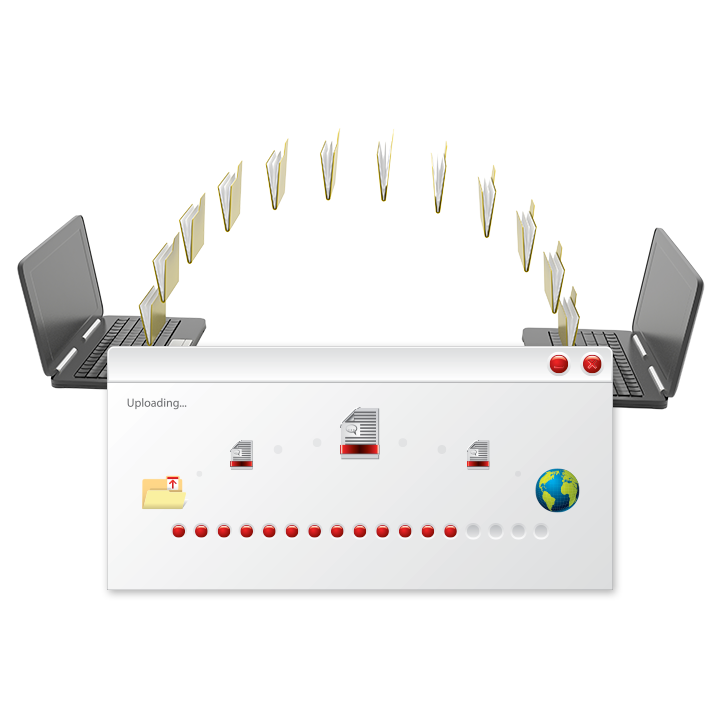

Designed to serve as a one-stop center for file transfer needs, it has capabilities to ensure reliable file transfers across heterogeneous platforms with enhanced encryption, authentication, compression, monitoring, and reporting features.
WHY MANAGED FILE TRANSFER
Managed file transfer (MFT), unlike traditional FTP, can address the following needs of enterprises:
-
Auditability
MFT logs file transfer activity so that administrators can determine where each file is sent and when the transfer occurred. The transfer log is centrally accessible. -
Security & Encryption
File transfer requests require acceptance from authorized people or application systems whilst encryption keeps data safe. -
Recoverability and reliability
Network or other errors that interrupt a transfer must not cause the transfer to be abandoned or partial files to be received. -
Platform connectivity
File transfers must be able to span multiple platforms.
KEY BENEFITS
Enterprise File Integration
- Complement existing middleware or SOA architecture
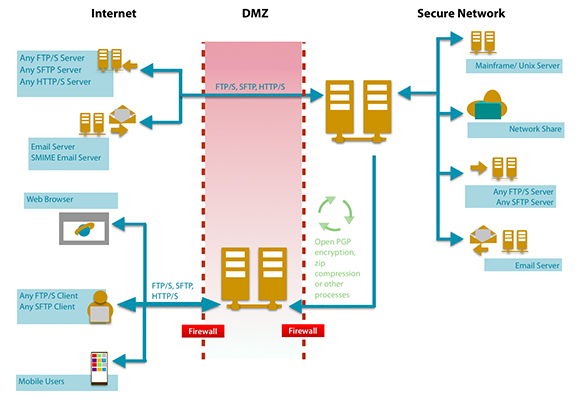
- DMZ implementation allows enterprises to connect with external trading partners
Reliable Transfers
- Resume or restart a file transfer that is interrupted because of network or system unavailability
- Perform code character set conversions when initiating a file transfer between AS/400 system
- File contents only appear at destination intact
Cost-Effectiveness
- Reduce/eliminate the costs of continually updating, maintaining, and improving a home-grown file transfer solution
Monitoring & Control
- Centralized control with automation
- Centralized monitoring dashboard
Improved Auditability
- Complete and detailed audit logs of the entire journey that a file takes
- Non-repudiation reduces risk of conflict and litigation
Security & Compliance
- Keep user IDs and passwords secured while in-flight
- Checksum ensures data is in original form
- PCI DSS-compliant